
From Siloed to Integrated Planning: How aerne engineering Is Transforming Project Management
Since May 2026, aerne engineering has been taking a new approach to project work. The aim is to strengthen collaboration between departments, plan tasks and capacity jointly, and coordinate at an earlier stage. How is this working alongside day-to-day operations? Where are the remaining challenges, and what is already working better? Patrick Halter, Head of _ae SERVICE, shares an initial assessment and explains what the changes mean for everyday working life.



When we build a system at aerne, several departments are usually involved. Engineering, manufacturing and other specialist teams all need to work closely together. If one task takes longer than planned, the subsequent steps are delayed as well. At the same time, we often have several projects running in parallel, all competing for the same employees and resources. Cross-departmental resource planning is therefore essential to identify capacity bottlenecks at an early stage. Previously, departments handled much of their planning in Excel and organised their tasks largely independently. This worked well within individual teams, but made it difficult to maintain an overview of projects as a whole. Where are resources lacking? Which tasks take priority? And who needs to be informed when a deadline shifts? Today, we want to answer these questions together. To achieve this, departments plan their tasks and resources using a shared framework, define responsibilities and coordinate their support requirements at an early stage. During regular sprint planning sessions, we discuss the next tasks to be tackled and what is needed to complete them.
Changing Habits Doesn’t Happen at the Push of a Button Preparations began with the kick-off in May 2026. We developed project templates, established planning guidelines and defined a common set of rules. Training sessions for several groups followed at the end of August. At the same time, we had to transfer ongoing projects into the new planning system using updated estimates of the hours required. And, of course, day-to-day operations had to continue throughout the process. We use allex.ai software to implement the new approach. Learning how to use the software was one thing; reorganising the way we work was another. That was where things became challenging. How long does a task actually take? Which tasks need to be completed before others can begin? And how do we allocate employees who are needed across several projects? Initially, there was some uncertainty around these questions. That didn't surprise me. When you've been planning work in a particular way for years, a single training session won't change your habits overnight. That's why we provided guidance and supported the teams as they transferred their projects into the new system. Even so, it's only through daily use that we can see which of our rules work well and where we need to make adjustments.
“We can’t prevent deadlines, priorities or circumstances from changing. But we can make sure we identify the impact early and act on it together. That’s what good project planning is all about.”
– Patrick Halter
Working Together, Not Just Alongside Each Other Let’s say the engineering team needs two days longer than planned to complete a task. This may mean that another team cannot start its work as scheduled or has to allocate its capacity differently. The situation becomes particularly critical when a delay affects a project’s critical path. Without corrective action, the project completion date will then also be pushed back. We want to identify these interdependencies early so that we can take timely corrective action internally and coordinate with the customer. After all, good project management also means communicating openly when deadlines or circumstances change. The Allex software helps us do this. It links tasks, milestones, dependencies and available resources in a network plan. When a task changes, the impact on other work steps becomes visible. The software doesn’t make decisions for us, but it highlights deviations and dependencies at an early stage. This allows us to review priorities, reallocate resources and manage our projects more proactively. Our new planning approach also benefits project controlling. Using a planned-versus-actual comparison, we compare the hourly budgets scheduled in Allex with the hours already recorded in our time-tracking system. This shows us how many budgeted hours each team has left for the remaining work and where we need to take a closer look at the effort involved.
Five Months On: What Still Needs to Be Done? The project templates are in place, the training sessions have been completed and the common rules have been established. We have laid the groundwork for all departments to plan their work according to the same standards. However, five months into the transition, it would be too early to consider the process complete. Our focus now is on embedding the new way of working into our daily routines and gaining experience. We still need to build confidence and consistency, particularly when estimating workloads, mapping dependencies and planning resources. We need to learn to plan more accurately and document the status of our tasks consistently. Feedback from our employees is essential in this process. It helps us understand which workflows are proving effective and where we still need to make adjustments.
“We’re not there yet. But we can already see the benefits of the new planning approach: greater visibility, clearer priorities and fewer surprises. Now it’s about applying it consistently in our day-to-day project work and continuing to improve it.”
– Patrick Halter
The main lesson I’ve taken away from the past few months is this: a new project organisation cannot simply be introduced and then ticked off the list. Whether it works becomes clear in day-to-day operations – when several projects are running simultaneously, deadlines are tight and resources are limited. On top of that, markets change, customers make decisions at short notice and delivery dates remain uncertain. Not everything can be foreseen or planned. That makes it all the more important to have a planning system that gives us a clear overview while allowing us to remain flexible. Because no software can replace experience, common sense or direct communication. What matters is that we remain able to act together, even when things don’t go according to plan.
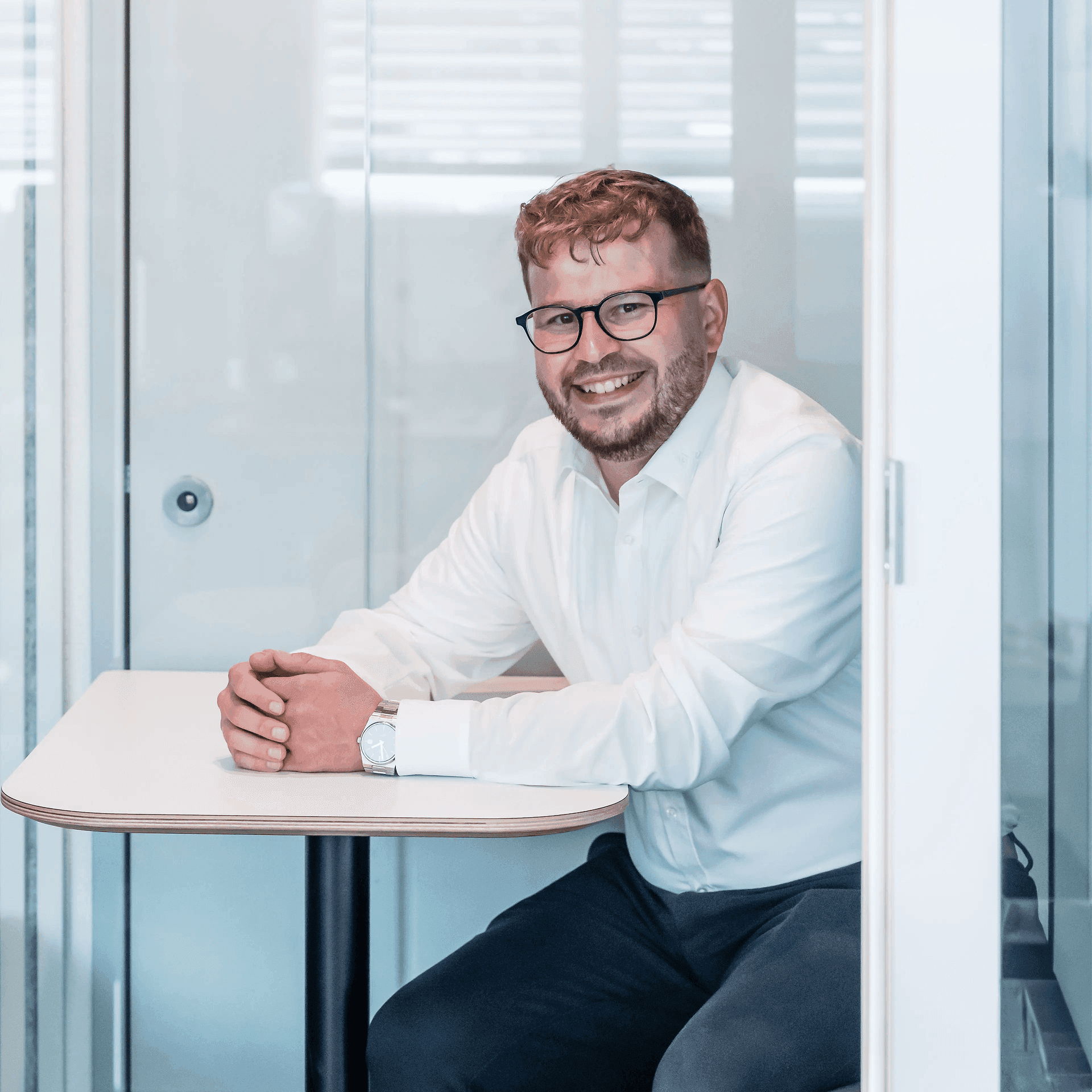
Patrick Halter Head of _ae SERVICE
As the driving force behind the new project organisation, Patrick brings greater clarity, sets clear priorities and improves coordination between departments – even when things don’t go according to plan.