..
..
..
..
..
..
..
..
..
..
..
..

..
..
..
..
..
..
..
..
..
..
..
..
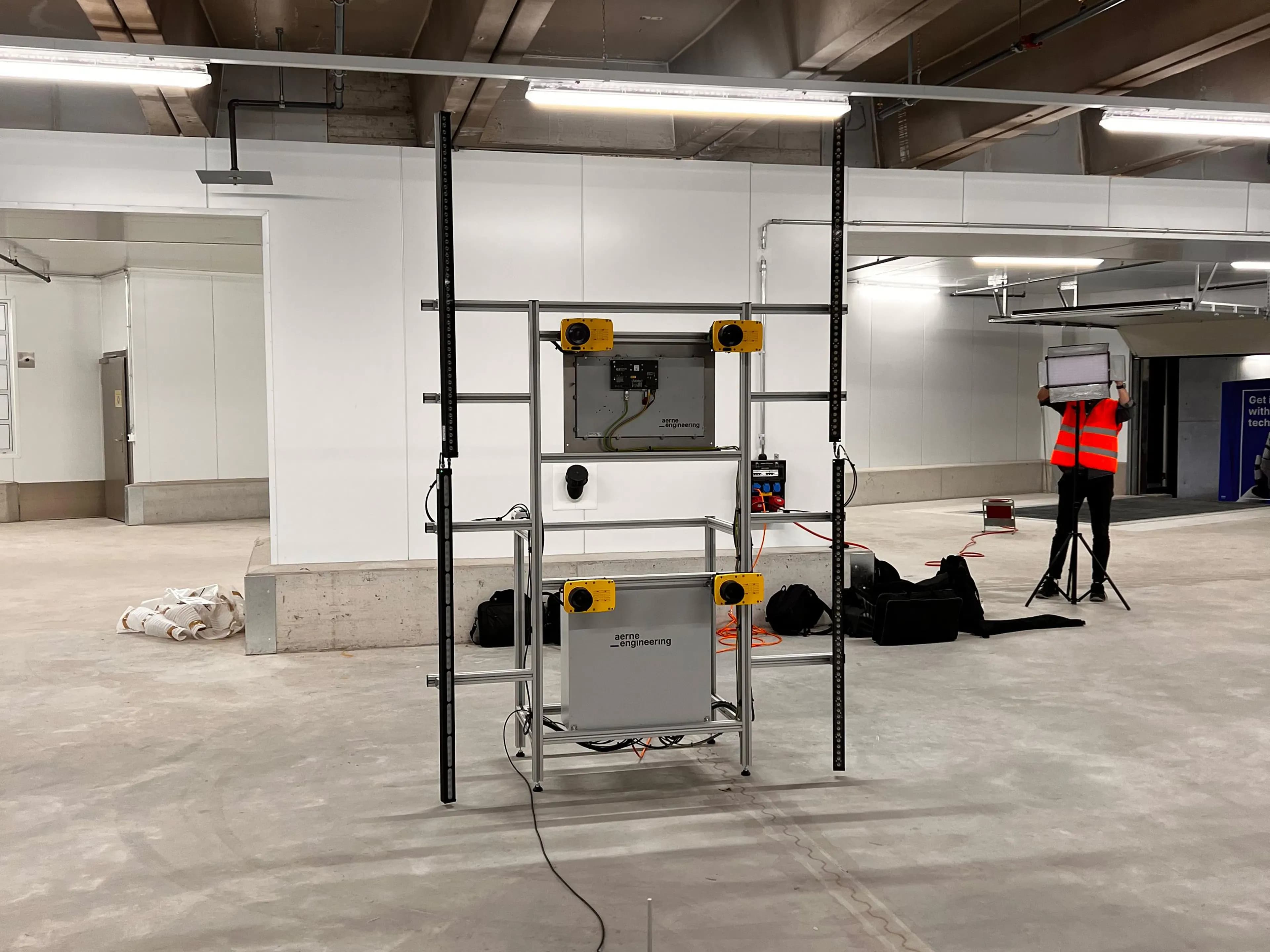
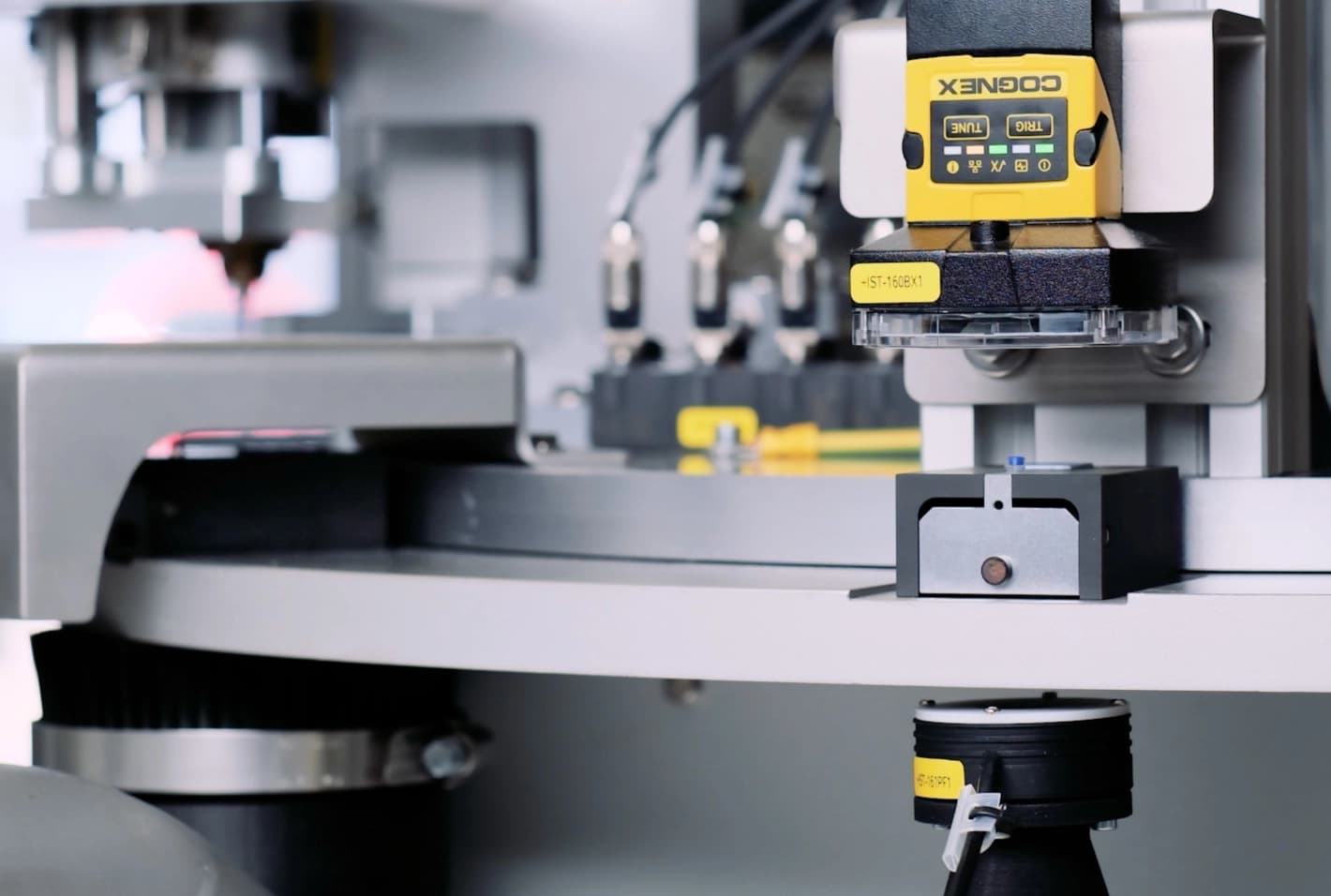
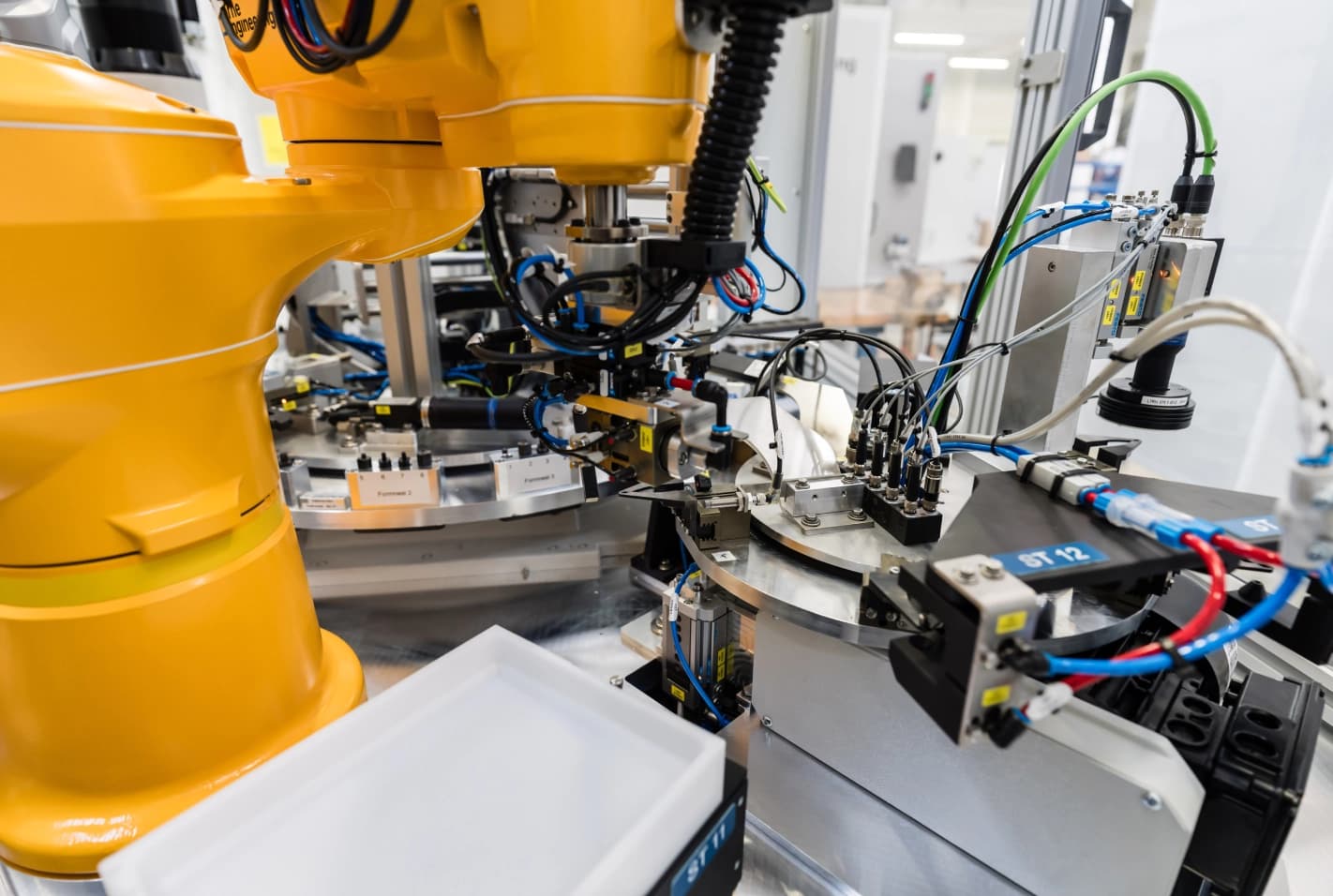
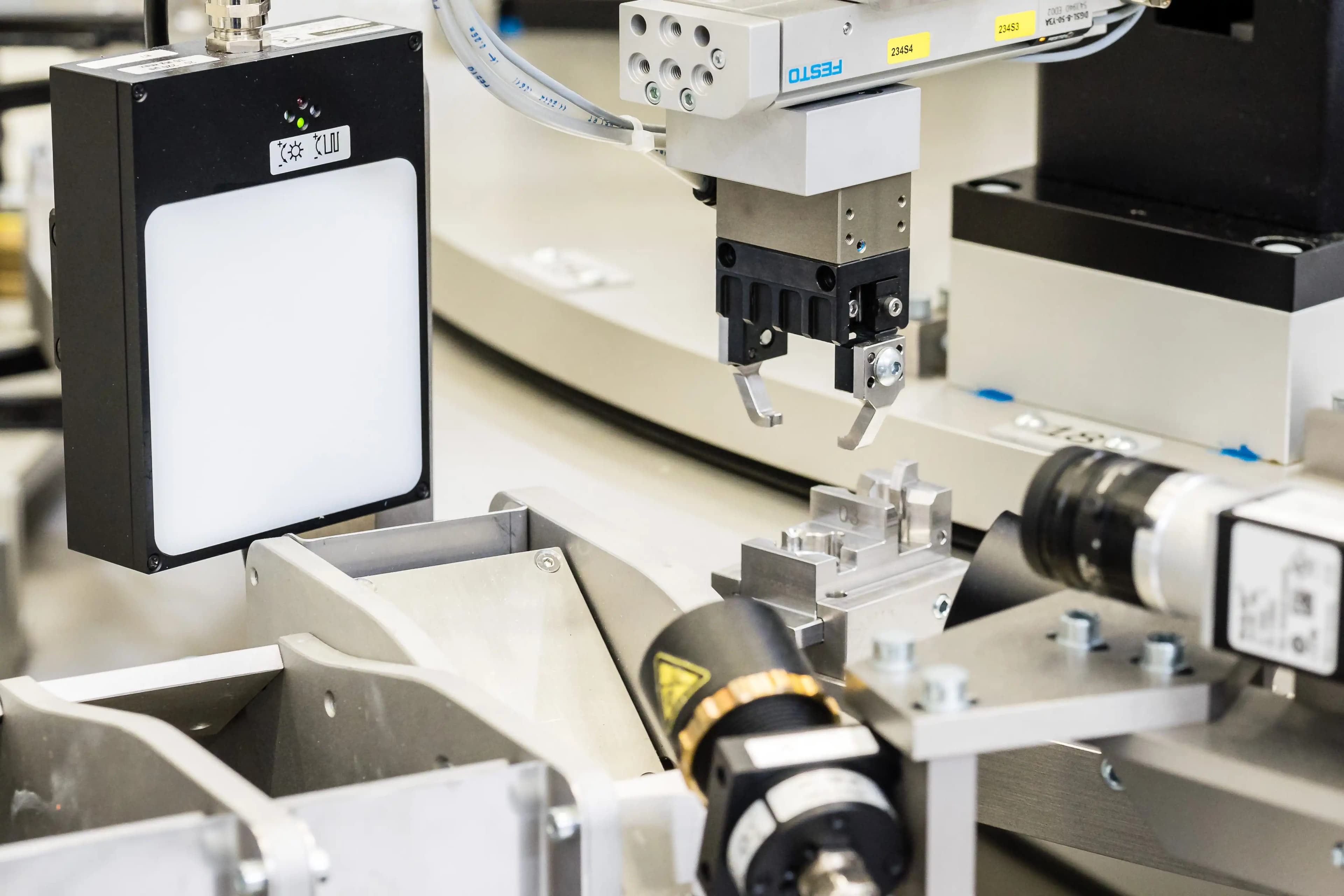
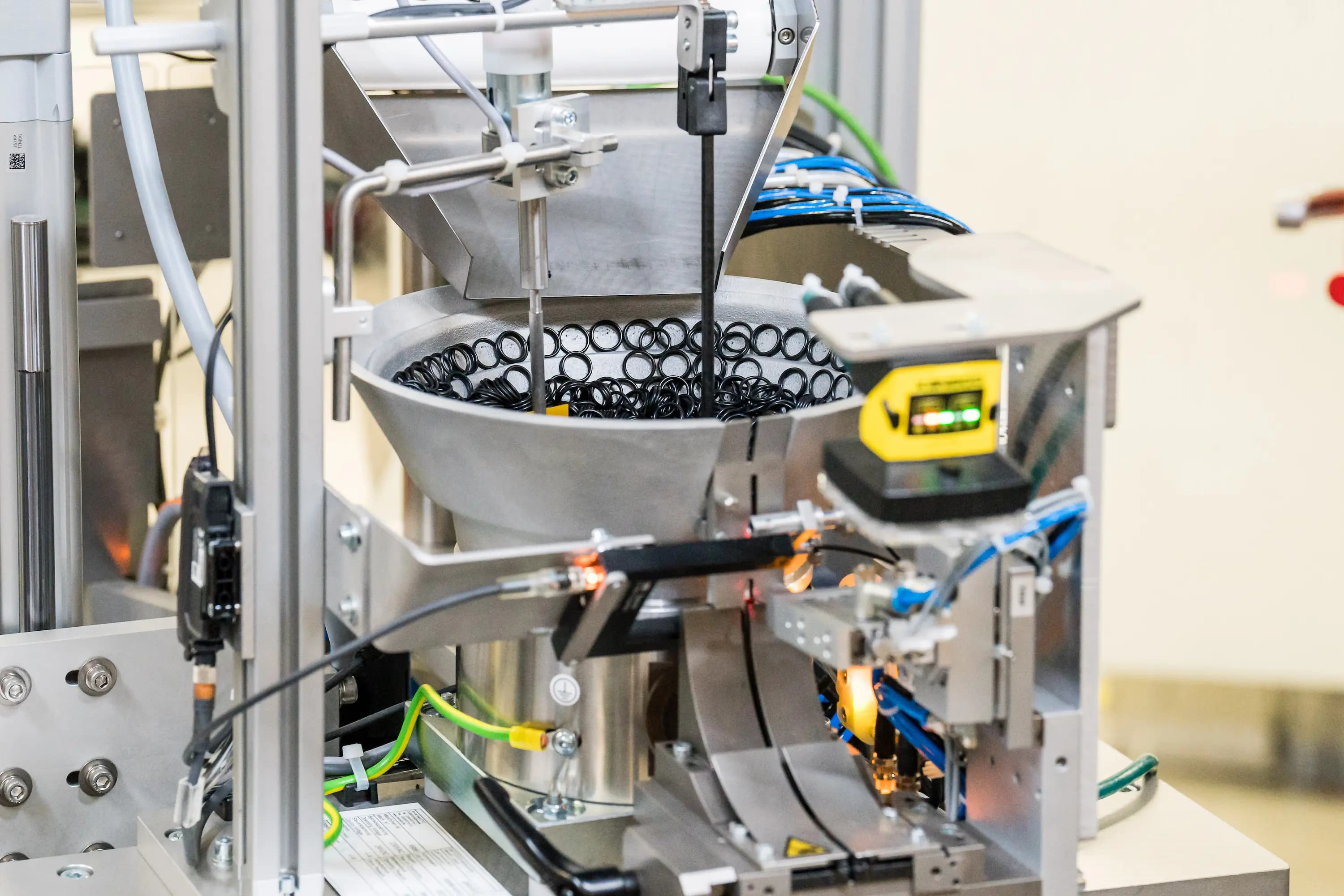
In Industry 4.0, intelligent and digitally networked systems set the pace. Optical inspection systems improve performance and efficiency in automated production and ensure precise quality assurance, where manual inspections are uneconomical or simply impossible. aerne engineering supplies innovative vision solutions for every application. Ready for the future? Let's build it together!



Measurement of position and location of objects
Measurement and comparison with setpoint
Checking and recognising anomalies
Of objects and anomalies
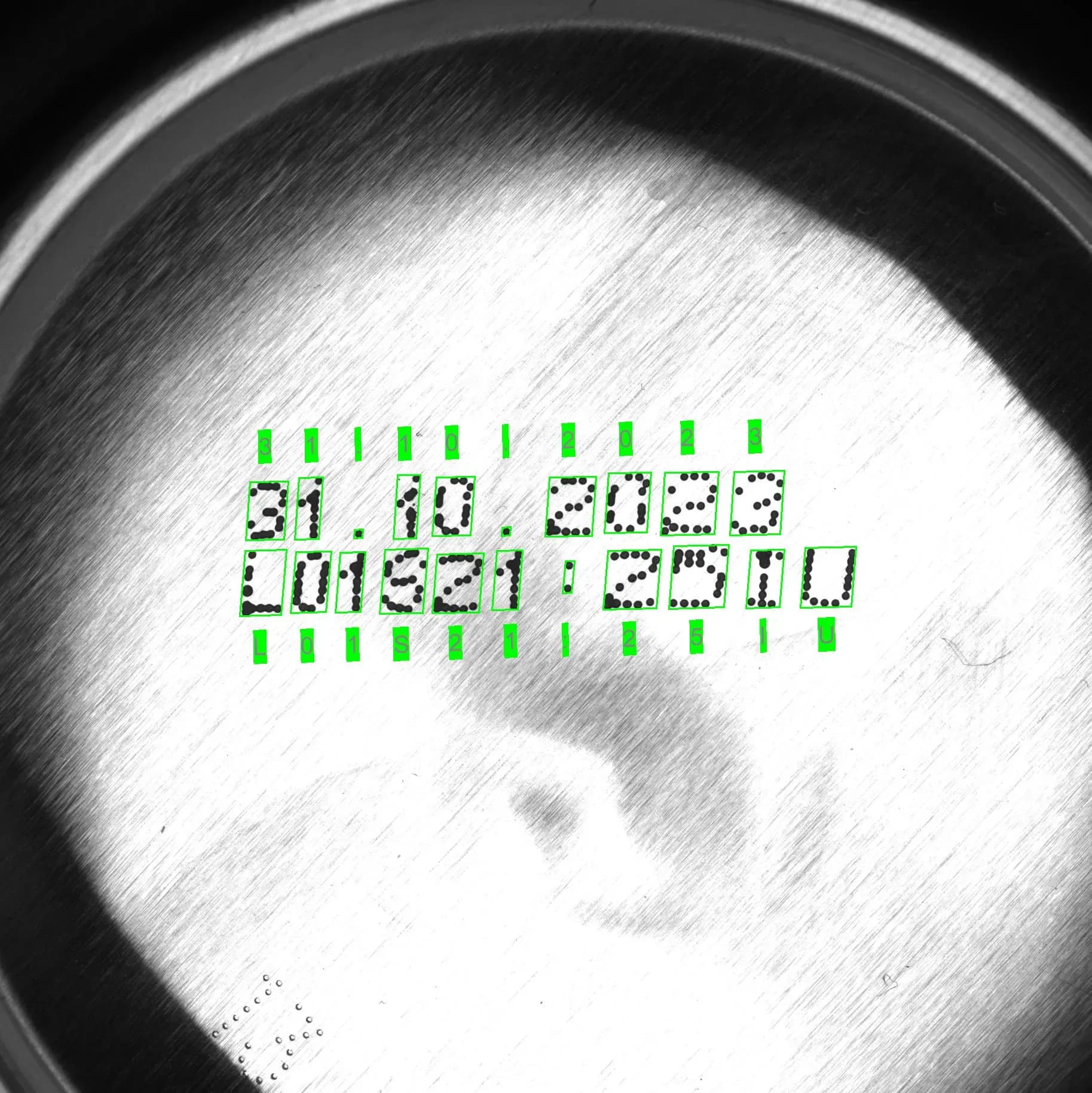
Barcodes, 2D codes and plain text (OCR)
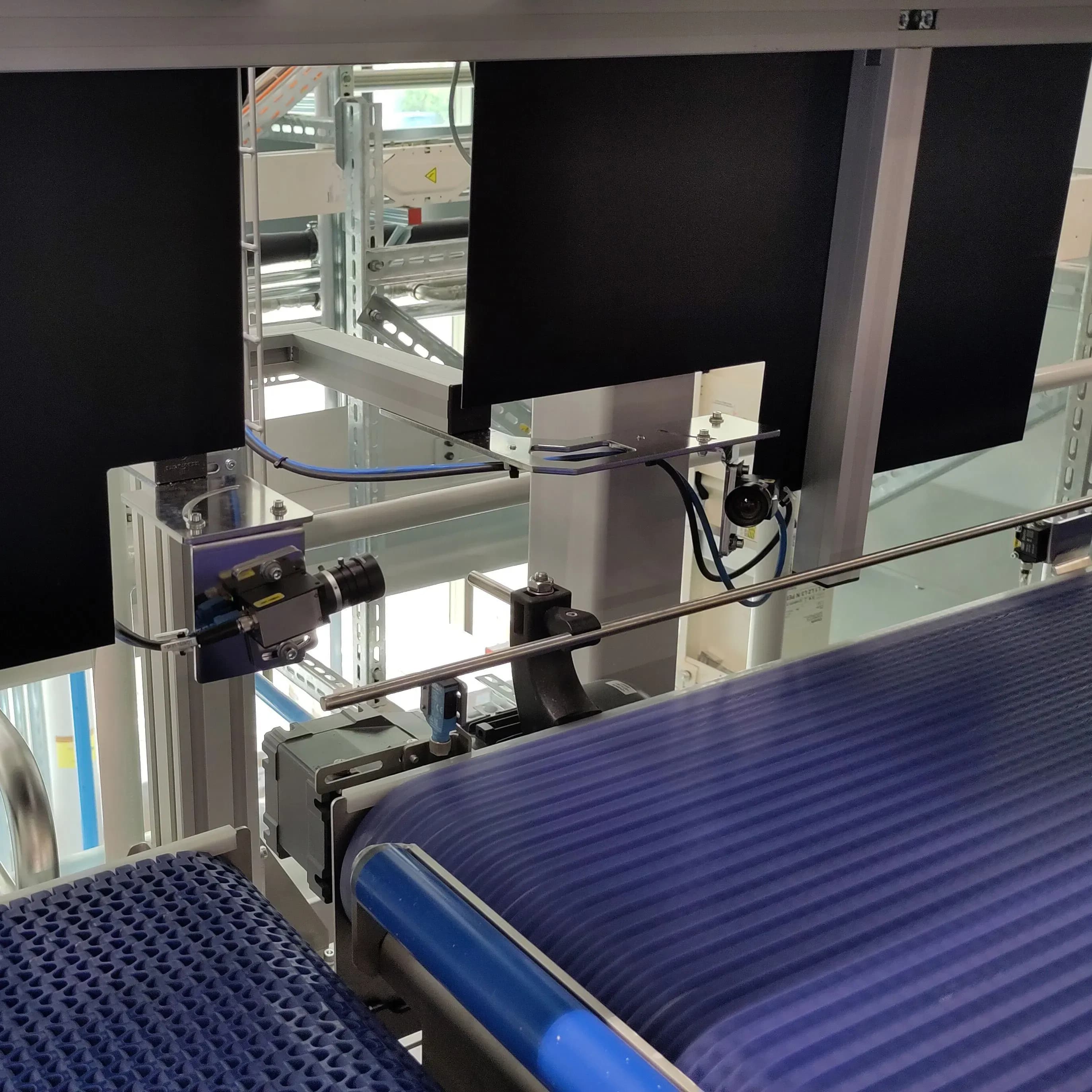
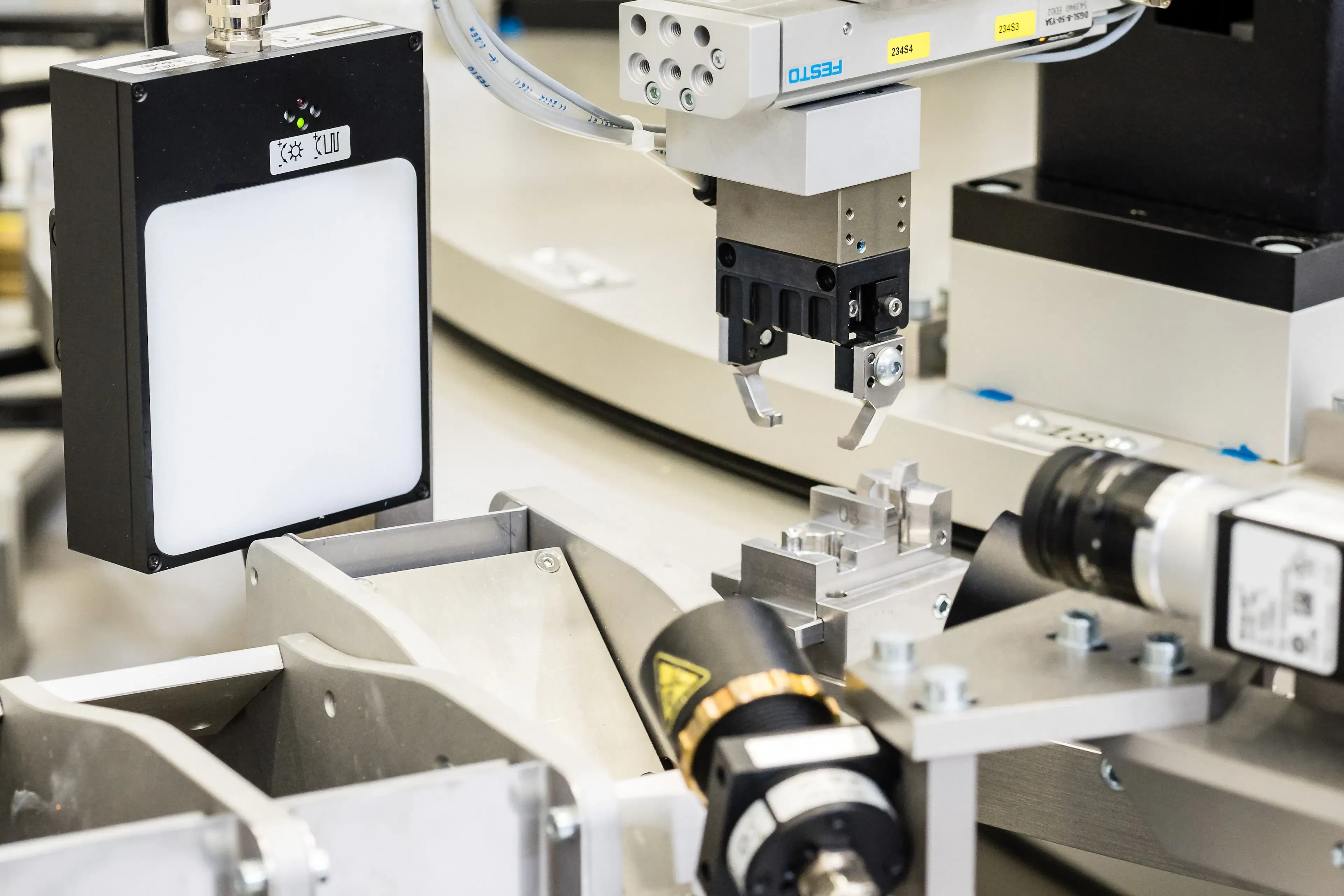
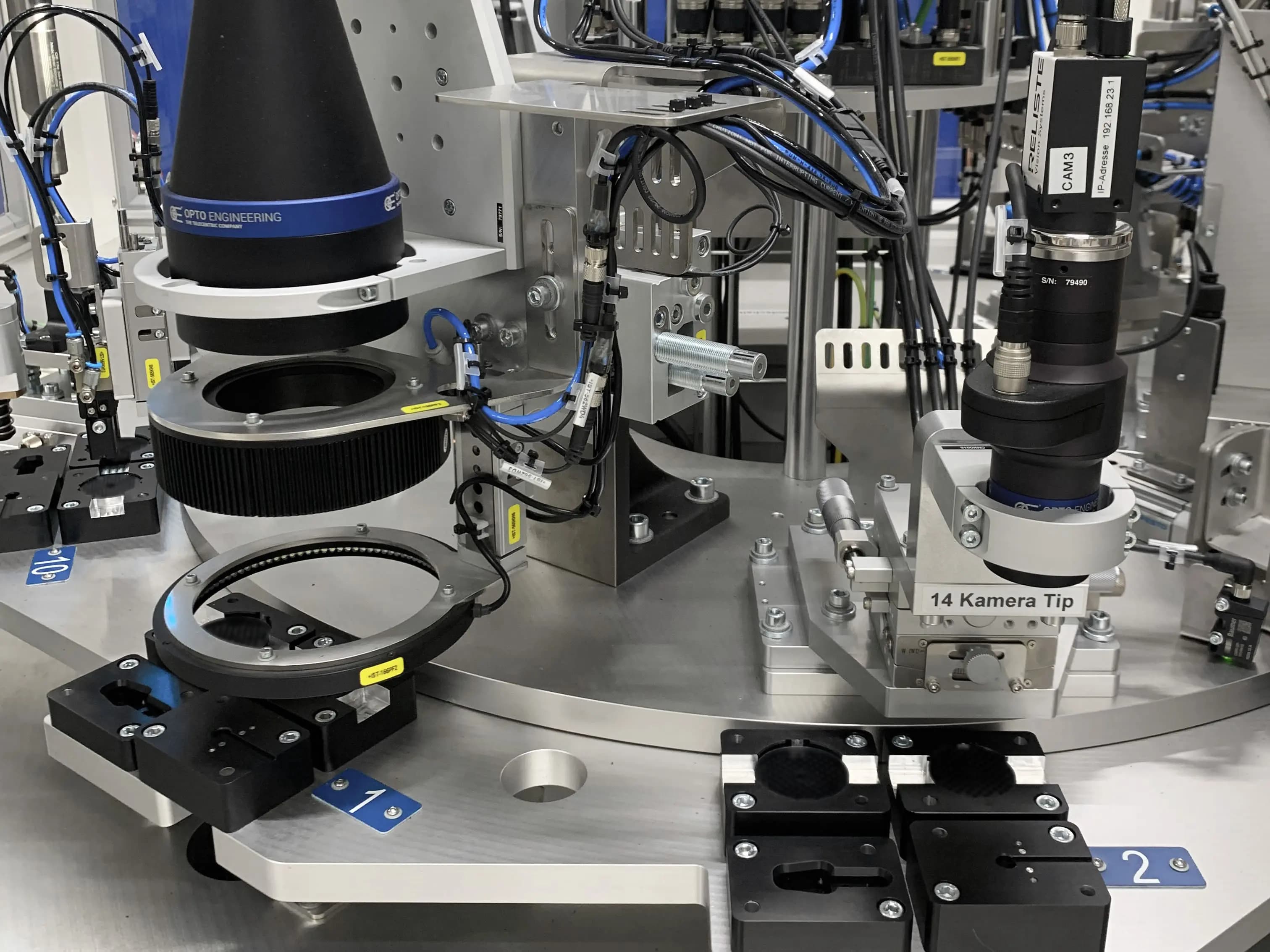
Any vision solution can only be as good as the quality of the captured image. High-contrast image data provides the basis for precise image processing. This requires the right equipment and skilful handling. We at aerne engineering have mastered this discipline. From start to finish. Precise, thorough and targeted.
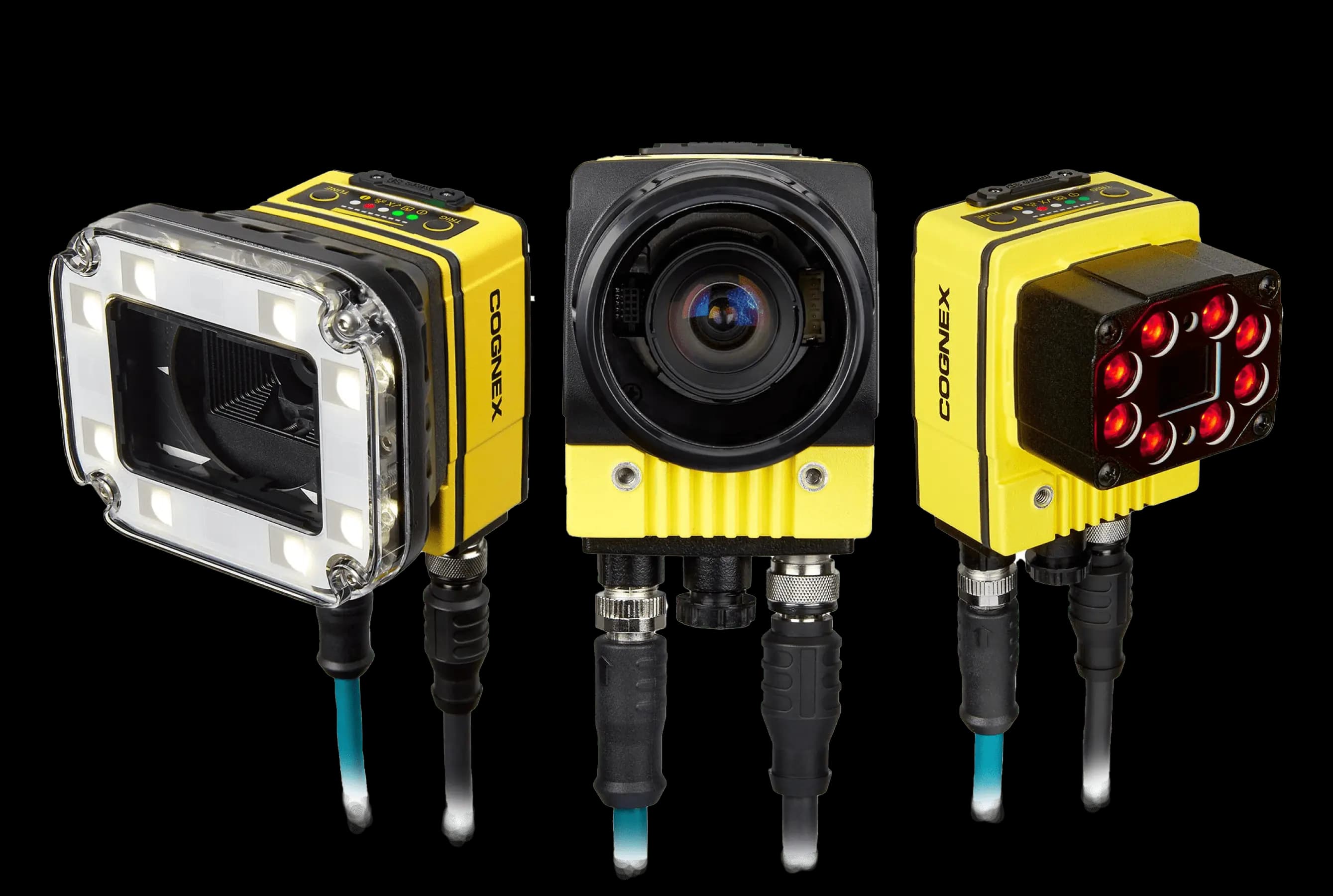
Industrial image processing, also known as machine vision, uses camera systems, lighting, image analysis and intelligent software for automated inspection, recognition and control in production facilities.
Industrial image processing can be used to automate quality controls, presence checks, dimensional checks, surface inspections, code reading, position detection and robot guidance. _ae VISION develops robust vision systems tailored to the product, process, cycle time, environmental conditions and industrial requirements.
Industrial image processing and machine vision are often used interchangeably. Both terms describe the industrial use of camera systems, lighting, software and image analysis for the automated inspection, measurement and control of production processes.
Today, machine vision is often understood in a broader sense and, in addition to traditional rule-based inspection methods, also encompasses artificial intelligence, deep learning, data-driven analytics and integration with automation and robotics systems. _ae VISION combines these technologies to create practical solutions for industrial applications.
Vision systems enable automated, reproducible and objective inspections directly within the production process. They help to reduce scrap, detect quality deviations at an early stage and standardise or replace manual visual inspections.
This brings tangible benefits for industrial companies: greater process reliability, consistent quality, improved traceability, lower error costs and additional production data for continuous optimisation. _ae VISION designs vision systems to be technically robust, economically viable and user-friendly in practice.
Industrial image processing can be used to automate numerous inspection tasks. These include presence checks, completeness checks, dimensional checks, surface inspections, position detection, OCR and plain text verification, barcode and DataMatrix reading, as well as automatic defect detection on products and components.
In addition, vision systems can be used for traceability, serialisation, verification of product markings, process monitoring and robot guidance. _ae VISION assesses which inspection tasks can be reliably automated from a technical perspective and how they can be meaningfully integrated into the existing production process.
Industrial image processing can detect, amongst other things, scratches, cracks, contamination, damage, dimensional deviations, assembly errors, missing components, incorrect parts, printing errors, positional deviations and faulty markings.
Which defects can be reliably detected depends on the product, material, surface, lighting, cycle time, camera technology and inspection strategy. _ae VISION assesses these factors in a feasibility study and uses them to develop a robust inspection concept for industrial applications.
Industrial image processing is suitable for surface inspections, completeness checks, presence checks, dimensional checks, OCR and plain text checks, barcode and Data Matrix reading, in-line measurement systems, end-of-line inspections and automated quality control.
Further applications include position detection, robot guidance, traceability, process monitoring and the collection of quality-relevant production data. _ae VISION develops application-specific solutions and tailors cameras, lighting, software, interfaces and integration to the respective production process.
A vision system is worthwhile when manual inspections are error-prone, time-consuming, ergonomically demanding or insufficiently reproducible. Industrial image processing is particularly relevant where there are high quality requirements, rising production volumes, the need for comprehensive documentation, traceability requirements or increasing cost pressures.
_ae VISION works with the customer to assess whether a vision system is technically feasible and economically viable. The aim is to find a solution that sustainably improves quality, process reliability, productivity and transparency in the production process.
Yes. Modern vision systems can utilise artificial intelligence and deep learning to detect complex defect patterns, variations, surface characteristics or irregular deviations. AI-based image processing is particularly suitable when traditional rule-based inspection methods reach their limits.
_ae VISION assesses whether traditional image processing, an AI approach or a combination of both methods is appropriate. The decisive factors are the inspection task, the data set, defect variance, the production environment, cycle time and requirements for traceability and process reliability.
Yes. Artificial intelligence can automate quality control where defect patterns are complex, variable or difficult to describe using traditional inspection rules. AI-based vision systems can detect patterns, deviations and visual features that are difficult to verify through manual inspection or rule-based image processing.
However, for industrial use, it is not just the AI algorithm that is crucial. Stable image capture, suitable lighting, representative training data, seamless integration into the production line and a robust inspection concept are all important. _ae VISION develops AI-supported image processing with a focus on robust application in production environments.
Vision systems are suitable for industrial companies with high standards in terms of quality, process reliability, traceability and reproducible inspections. Typical sectors include medical technology, the pharmaceutical industry, food production, electronics manufacturing, the plastics industry, the packaging industry, the automotive industry, mechanical engineering and precision engineering.
_ae VISION tailors every solution to the sector-specific requirements, the product, the process and the production environment. This results in vision systems that not only function technically but can also be relied upon in day-to-day industrial use.
Yes. Vision systems are frequently used in the medical technology and pharmaceutical industries to reliably support high quality standards, traceability, product identification and documentation requirements.
Typical applications include completeness checks, OCR and code reading, product and component identification, surface inspections, assembly checks and end-of-line quality controls. _ae VISION develops robust inspection systems for these purposes, designed for process reliability, traceability and industrial integration.
Yes. Many existing machines and production lines can be upgraded with vision systems by adding camera systems, lighting, image processing and suitable interfaces. This enables inspection processes to be automated, scrap to be reduced, quality data to be recorded and existing equipment to be modernised in a targeted manner.
_ae VISION assesses how a vision system can be integrated into the existing plant in a technically sound manner. This assessment takes into account space constraints, lighting, cycle time, control interfaces, the operating concept, data exchange and the production environment.
Yes. Modern vision systems are a key component of the smart factory and support companies in implementing Industry 4.0. They provide quality- and process-relevant data directly from the production floor and enable process monitoring, traceability, fault analysis, trend analysis and the continuous optimisation of manufacturing processes.
_ae VISION integrates industrial image processing with automation, MES, ERP and data interfaces. This integrates inspection results and production data into digital production, enabling them to be used for quality management, process optimisation and data-driven decision-making within a smart factory.
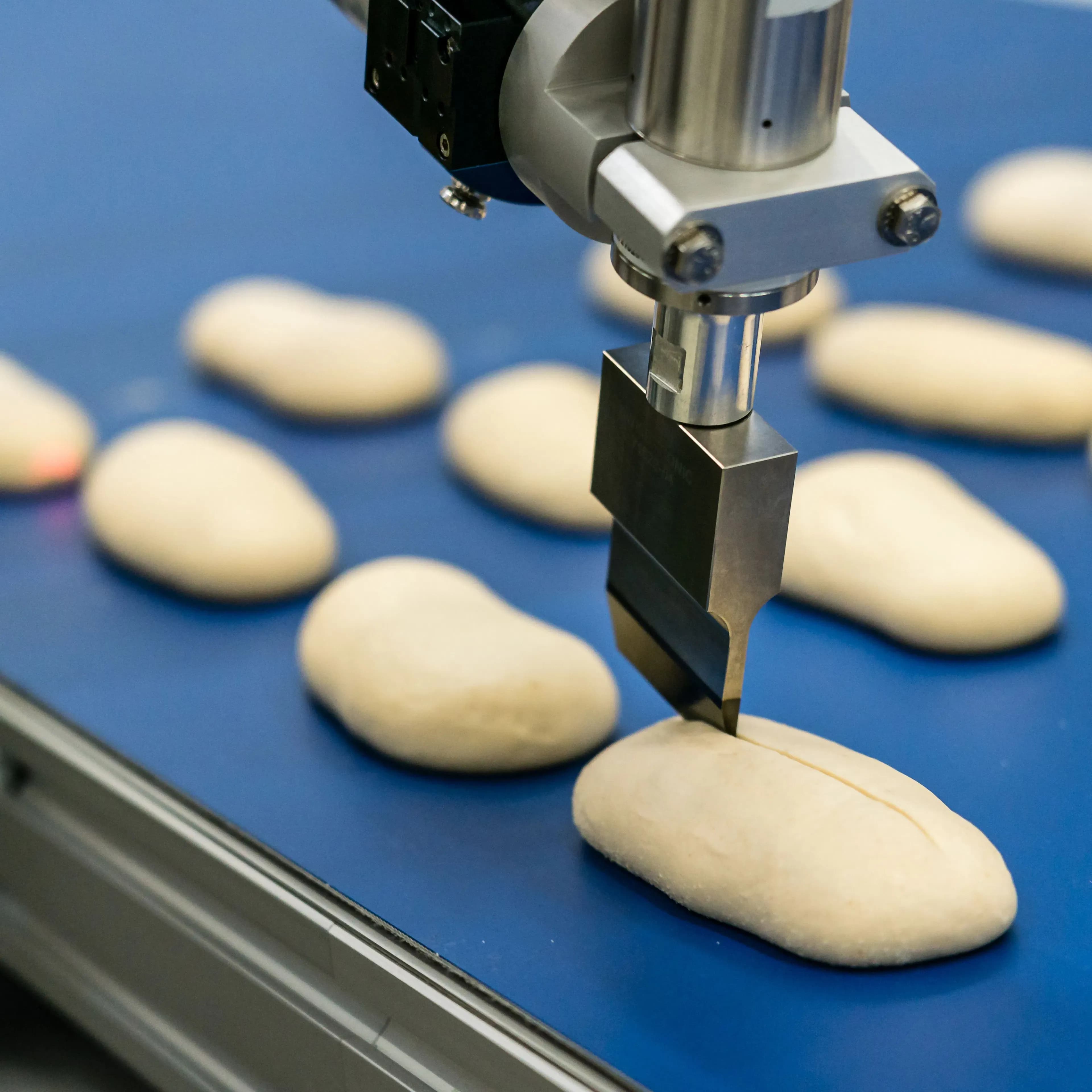
Yes. Vision systems can assist or control robots by detecting the location, position, orientation and features of components. This technology is often referred to as vision-guided robotics or robot guidance.
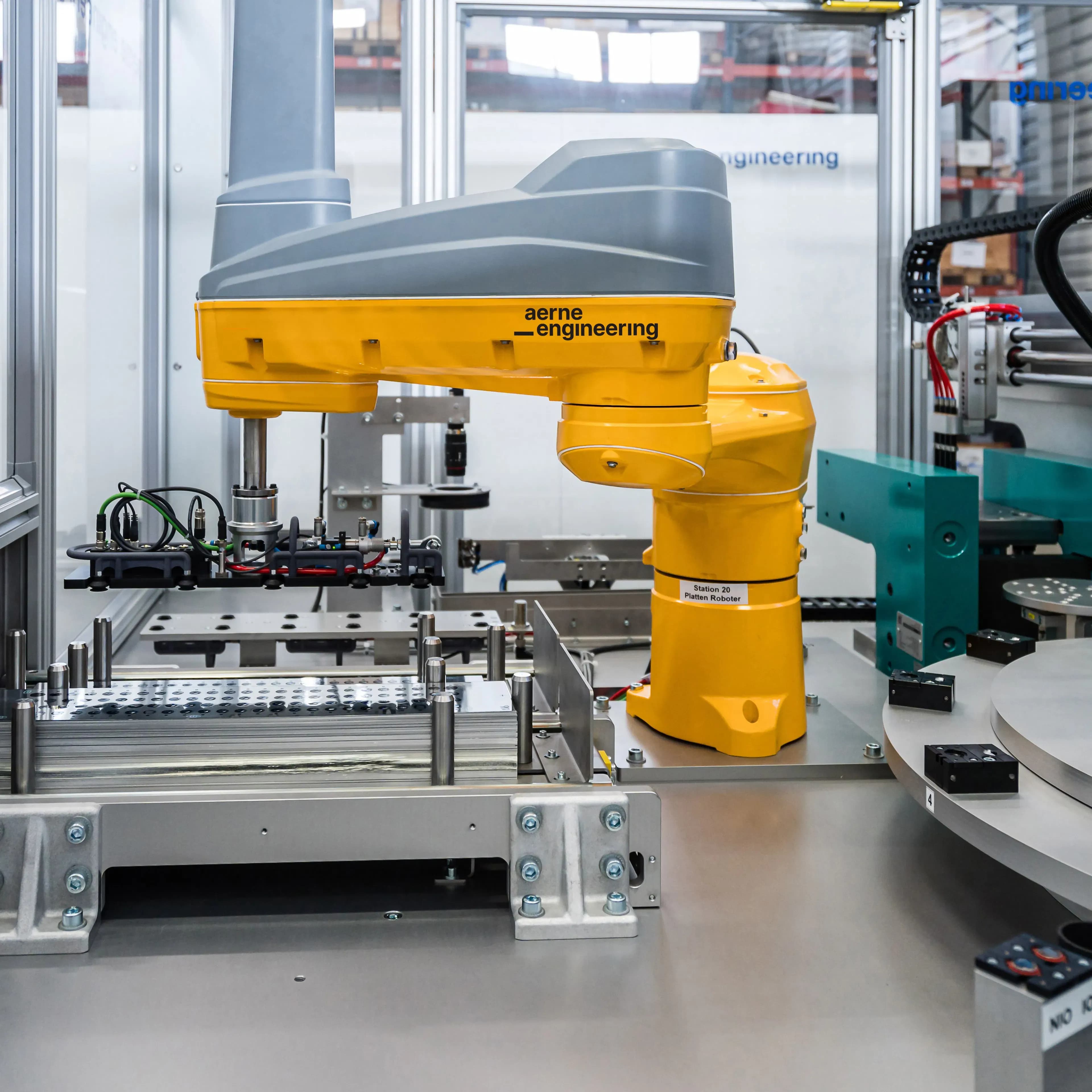
Typical applications include pick-and-place, parts feeding, handling, assembly support, position correction, quality inspection and flexible automation. _ae VISION combines camera technology, image analysis, robotics and automation to create integrated solutions for industrial production processes.
A machine vision project begins with an analysis of the inspection task, the product, the process conditions and the economic objectives. This is followed by a feasibility study, the selection of the camera, optics and lighting, the development of the inspection concept, software design, clarification of interfaces, integration, commissioning and optimisation.
_ae VISION supports customers throughout the entire project. The aim is to deliver a vision system that reliably fulfils the inspection task, is integrated into the plant, remains user-friendly and functions effectively in the production environment over the long term.
_ae VISION provides support for the integration of vision systems into existing machines, production lines and automation solutions. As a specialist division of Aerne Engineering AG, _ae VISION combines industrial image processing with automation, robotics, electrical engineering, software development and mechanical engineering.
This provides customers with a single point of contact for analysis, design, technical implementation, interfaces, commissioning and optimisation. This reduces the coordination effort and enhances the solution’s practical suitability within the existing production environment.
The cost of a vision system depends on the inspection task, the number of cameras, lighting, accuracy, cycle time, software requirements, interfaces, data connectivity and integration effort. A reliable cost estimate can therefore only be provided following an analysis of the technical requirements and the production environment.
_ae VISION uses this information to draw up a bespoke concept, including a technical solution, a feasibility assessment and a transparent cost estimate. This involves assessing which solution is technically reliable and economically viable for the specific process.
The payback period for a vision system depends on the application, inspection effort, scrap costs, production volume, quality requirements and potential for automation. Savings typically arise from reduced manual inspection effort, lower error costs, greater process reliability and improved traceability.
_ae VISION supports customers in assessing the economic benefits. This involves considering not only investment costs, but also quality costs, process risks, labour costs, availability and long-term production reliability.
_ae VISION supports companies facing a shortage of skilled workers by automating manual visual inspections, recurring quality checks and visual inspection tasks. This reduces the workload on staff, standardises inspection processes and enables existing skilled workers to be deployed more effectively.
As a specialist division of Aerne Engineering AG, _ae VISION can combine image processing with automation, robotics and engineering services. This results in solutions that stabilise production processes, reduce quality risks and provide a sustainable remedy for staff shortages.
_ae VISION is the specialist division of Aerne Engineering AG for industrial image processing, machine vision and AI-supported inspection systems. We develop vision systems for quality control, process monitoring, traceability, position detection, robot guidance and automated inspection in production facilities.
Customers benefit from the combination of image processing, automation, robotics, electrical engineering, software development and industrial implementation experience. This results in robust and cost-effective solutions, supported throughout the entire process – from feasibility analysis through integration and commissioning to optimisation and support.
_ae VISION combines expertise in industrial image processing, machine vision, artificial intelligence, deep learning, quality control, robotics, vision-guided robotics, OCR, barcode and Data Matrix reading, traceability, process monitoring, Industry 4.0 and automated inspection systems.
In addition, _ae VISION brings expertise in lighting, camera technology, image analysis, software development, interface integration, robot guidance and process optimisation. Thanks to its integration within Aerne Engineering AG, vision systems can be holistically integrated into machines, automation systems and production processes.